The big news in the cheese world was the FDA's recent closure of the Estrella Family Creamery in Montesano, Washington, which caused quite the ruckus in the Northwest (read more details at the Pacific Northwest Cheese Project website). Estrella had been having some trouble with Listeria contamination in the past several months. The forced shut-down stems from prior FDA product recalls and tests at the facility with positive indications of Listeria. Upon hearing the news a few days ago, I was surprised. I knew the creamery had been having problems curbing the Listeria issue at their facility. But, one, I was under the impression that those issues were being diligently addressed. And, two, it seems a little ridiculous that the FDA can come in all drug-bust style, raid a farm, and confiscate cheese like a scene out of the Wire. Granted, I didn't see the event, but having the FDA drive up with Federal Marshals to seize cheese, doesn't seem like a routine visit from the health inspector.
Estrella is a true family-run operation: just mom, dad, and six kids, each with a role in either taking care of the animals or making cheese. I had visited the creamery a few weeks ago during their farm store hours. They make awesome cheese that I love. If this puts them out of business for good, it would be a tragedy. Also, while I was there I was graciously given a tour by a member of the family. I saw that the creamery was taking multiple corrective measures, including renovations, installing better air-flow systems, and halting the production of the most problematic cheese. It seemed like the FDA tests and recalls were being taken very seriously and everyone was doing their best to eliminate the issues.
Listeria is a bacteria that is commonly found in the environment. True, good sanitation can help prevent its growth. Historically there have been Listeria issues in cheesemaking facilities with poor sanitation. Yet, because Listeria is so common, you could probably find it anywhere if you really tried. For that reason, I've heard stories of several very meticulous and clean cheesemakers who have had a lot of trouble ridding their facility of Listeria. Some have found it so impossible to get rid of it that they simply shut down and move to a new facility. In many stituations it has nothing to do with any wrong-doing or error in sanitation on the cheesemaker's part.
While Listeria is a serious and deadly bacteria, especially with vulnerable populations such as the elderly and pregnant women, it's also just a food risk like any other. I've eaten raw meat on multiple occasions. I'm warned of the risk. As long as the food preparation is done in a clean manner, if I get sick, it's my own damn fault. Most pregnant women are told not to eat raw milk cheeses because of the chance of Listeria hurting the fetus. After being warned of the risk, people make their own reasoned decisions. I've heard that European women are far more likely to eat raw milk cheese when pregnant. Once, my entire family got violent Salmonella poisoning from eating at Applebee's. To my recollection, there was no FDA raid on chicken breasts in the Applebee's kitchen. It seems that product recalls and corrective measures usually address these situation (unless it is very grave or the result of severe issues).
Yes, health inspectors and food safety regulations should be respected. It's a good rule of thumb to treat government workers nicely and respect the crappyness of their job. If you do, then the relationship you build with them is likely to be productive, and at times, save your ass. Yet, the way some foods, especially dairy products, are treated as contraband is asinine. Some of the regulations regarding cheeses are downright stupid. Many state regulations require that cheese be kept at 41 degrees at farmers markets. Despite the fact that most cheeses have been living their entire life in an aging cave set to temperatures in the 50s, and the best way to eat cheese is at room temperature. Raw milk is treated like poison despite the fact that in many ways it's much better for you than the jugs you get in the grocery store. At a certain point we create a culture of paranoia.
Nobody wants someone to get sick, or worse yet, die from their product. Every cheesemaker I've met or worked with does their best to comply with the rules, keep everything sanitary, and take corrective measures when something goes wrong. You do the best you can, take precautions, and the rest is just a risk like anything else in life.
Showing posts with label Cleaning. Show all posts
Showing posts with label Cleaning. Show all posts


Not so Fresh, but So Clean Clean
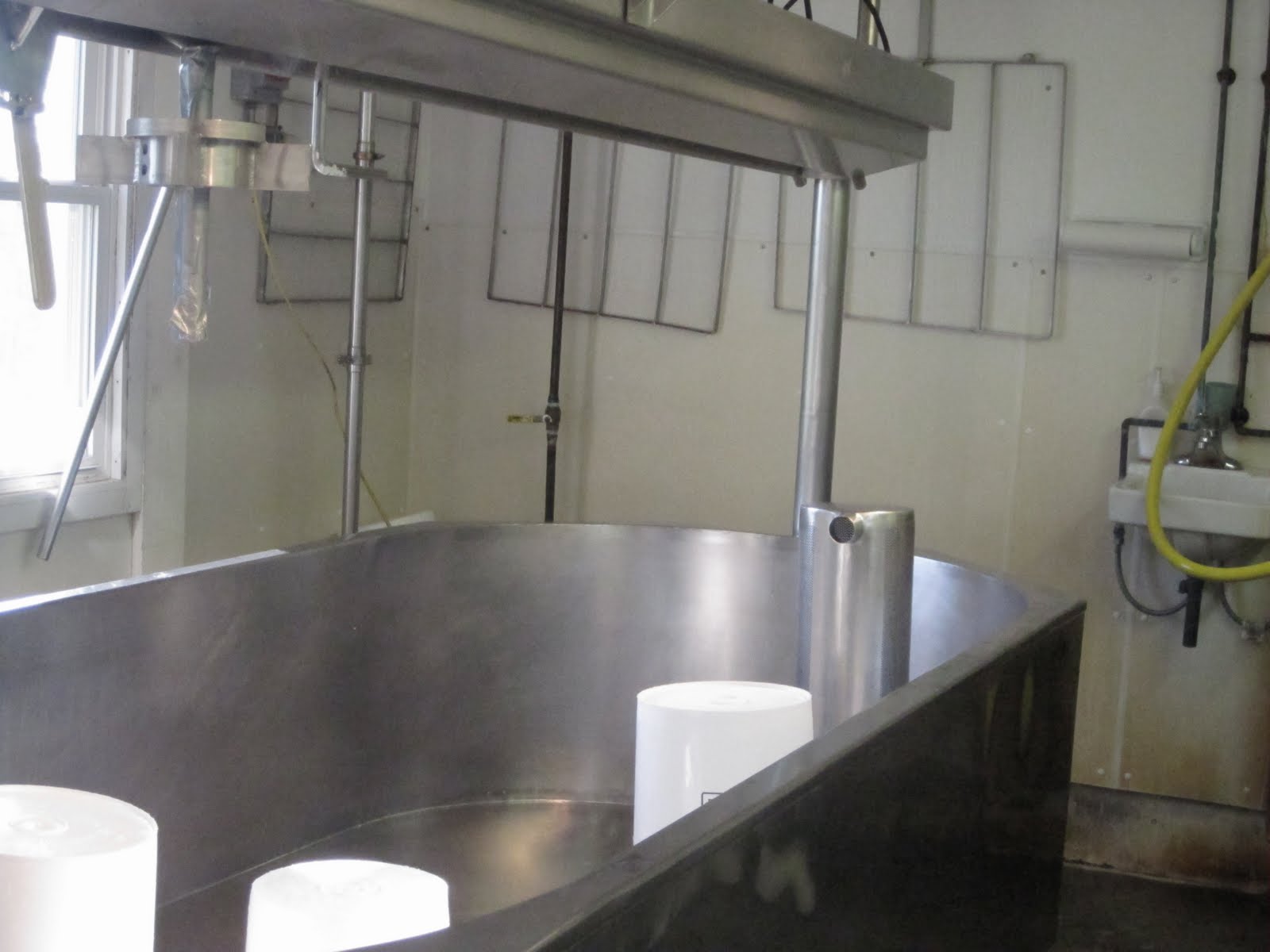 Cheesemaking is a bit of a paradox. I was told, and subsequently confirmed via Google, that "cheesemaker" was on an episode of Dirty Jobs. It's a bit curious to call cheesemaking a dirty job because the cheese room must be as sanitary as an operating room in order for the cheese to age properly, and most importantly, be safe to eat. Before handling anything involved in the cheesemaking process, I have to "scrub in." I wash my hands up to the elbow, and dip my hands, arms and gloves into chlorine sanitizer. Yet, by the end of the day I feel dirty, soaked, and in desperate need of a shower--kind of like the feeling at the end of a hot multi-day outdoor summer music festival...except with less alcohol and delirium.
 In addition to scrubbing in, every surface or piece of equipment the cheese touches is doused with sanitizing solution of water and chlorine before beginning the making process. You must also pass your work boots through a foot bath of sanitizer before entering the cheese room or the aging room. One of the hardest parts for me as I get used to being in the cheese room is remembering what I can and can't touch when I'm not "scrubbed in" or sanitized during the cheesemaking.
Cleaning up after cheesemaking is also a very systematic process of lather, rinse, repeat. All the molds and equipment must be scrubbed and rinsed. The cheese vat is scrubbed and washed with hot soapy water multiple times to remove all the remaining curd. The tables are scrubbed of curd and rinsed, as is the cheese press. The walls are scrubbed and sprayed and the floors are scrubbed and hosed with a high pressure water gun to shuttle every bit of curd remnant into the drain in the corner of the room. Even the drain must be hosed to ensure no ninja curd is caught hiding in the crevices. Some items also get an additional acid wash to ensure that all residue is removed. The bulk tank, which holds the milk after milking and prior to cheesemaking, gets the same sanitize and wash treatment before and after use.
After flipping the previous night's cheese and moving it to the brine bath, my second day started with cleaning up from Thursday's sweltering cheesemaking session. Washing all of the large metal molds and equipment over a steamy basin and scrubbing the cheese vat multiple times can require just as much exertion and time as actual cheesemaking. So while the pace was a bit more relaxed, I still walked out of the cheese room with my hair matted to my face, knowing I had tackled a substantial chunk of the process.
I took my lunch break in the main house and returned to learn how to fill orders and prepare for Saturday's farmers markets. I learned the essentials of reading the orders, pulling cheese from the shelves, cutting accurate pieces of cheese, and wrapping cheese. Lots of wrapping. It was like Christmas. A delicious cheesy Christmas.
My last task of the day was a brief foray into the aging room. What I'm about to describe is the reason some people don't like cheese, as well as the reason at least affineur (person in charge of aging cheese) might be deserving of an episode on Dirty Jobs. Don't get scared. Or if you can't control your squeamishness, stop reading. It's food. You need food to live. Most of the food you eat has been grown or made for centuries in conditions and processes we'd all likely find objectively disgusting. Beer and wine are made from ingredients that are essentially allowed to decompose. Many of the best vegetables are grown in fertilizer containing manure. That's right. Poop! You're not gonna stop drinking wine and eating salads are you?!
As you walk into the aging room, the pervasive odor of ammonia tingles your nose to life. The odor is from a combination of chemical reactions that takes place from the breakdown of protein in the cheese during the aging process. I don't mind the odor because it reminds me that the cheese is doing what it's supposed to do to be delicious. Also lingering in the air are the various bacteria cultures and molds used to age the cheese. Most aging rooms also have cheese mites, which feed on the rind and create a dust that collects on the shelves and floors. I suppose I can't hate on a bug that lives for the sole purpose of eating cheese. But seriously, cheese mites, why are you here? Get outta my way with your uselessness! My task for the day was to make the aging room fresher by cleaning the floors. I squeegeed the floors of the dust and film that had sloughed off from the rinds while one of the cheesemakers hosed all the gunk into the direction of the drains. There was a clogged drain issue, but I steered clear of solving that problem. I guess even I have my limits.
I'm won't lie; it was unappetizing. But it didn't stop me from putting blue cheese on my burger the next night.
So at the end of my second day, which was on paper less intense than the first, I still walk out feeling pretty spent. In two days, I've gone through five sets of clean clothes and have developed a lovely (and painful) red chafing mark on my calf from the work boots. Yet, I can't wait for the next day! I've never been so excited to come into work on a weekend.
Subscribe to:
Posts (Atom)